 Loading...


The Philippines is no stranger to disruption.
Typhoons, floods, earthquakes, drought and El Niño-driven water shortages, and even man-made emergencies can halt operations, strain supply chains, and put entire organizations on the back foot without warning.
And yet, time and again, companies find themselves scrambling to draft a public statement, brief their employees, or respond to a customer complaint only after the disruption has already hit.
This is the difference between being crisis-reactive and being crisis-ready.
One waits for the emergency to dictate the response.
The other has already done the thinking, so that when disaster strikes, whenever it strikes, the only thing left to do is execute.
For businesses operating in the Philippines, crisis communications isn’t a nice-to-have.
It’s operational infrastructure.
As essential as your supply chain contingency plan or your insurance coverage.
The question worth asking year-round is simple: if a major disruption hit your operations tomorrow, would your organization know exactly what to say, to whom, and how fast?
Did You Know?
The Philippines experiences an average of 20 tropical cyclones annually, with around 8 making landfall.
– (World Bank, 2023)
Disasters affected approximately 103 million people and caused PHP 409 billion in economic losses from 2010 to 2019.
– (World Bank, 2023)
Only 49% of companies have a formal crisis plan, while fewer than 25% conduct drills to test them.
– (Capterra/Forbes, 2024)
In 2024, 75% of organizations conducted preparedness training, and more than 80% exercised their crisis plans.
– (BCI, 2025)
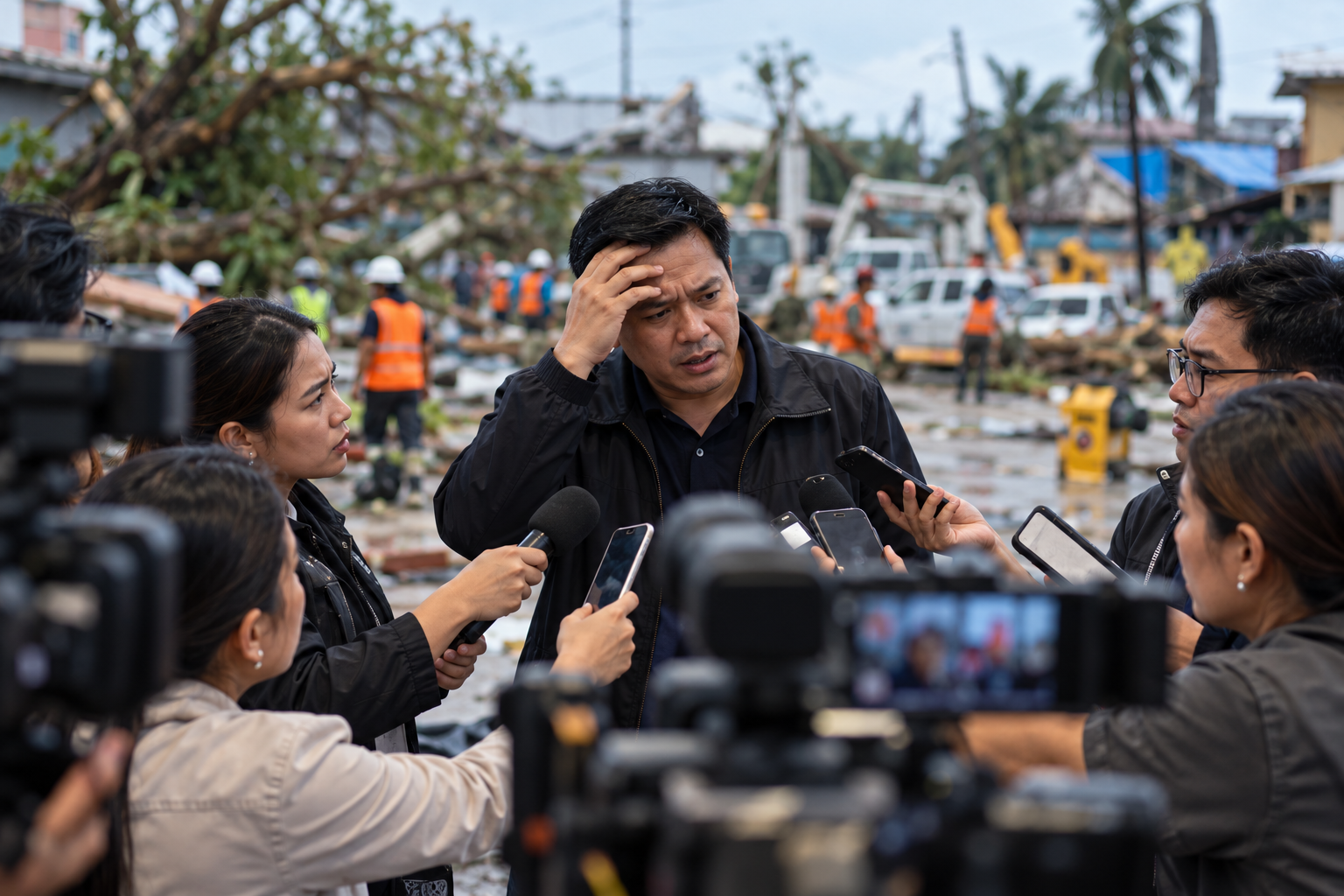
Why Reactive Crisis Communication Fails
When a disruption hits, the pressure to respond is immediate.
Employees want to know if it’s safe to report to work.
Customers want to know if services will be delayed.
Local government units want coordination, not confusion.
Media outlets want a statement, often within the hour.
Companies without a crisis communication plan tend to make the same mistakes under pressure:
- Messaging that contradicts itself across departments
- Delayed responses overtaken by rumors
- Or statements drafted so hastily they create more reputational damage than the disruption itself.
In a country where disaster preparedness for businesses is increasingly scrutinized by regulators, investors, and the public alike, that kind of stumble is costly, and avoidable.
Corporate crisis management in the Philippines has to account for a reality that’s different from many other markets:
The frequency and unpredictability of natural and operational disruptions means preparedness can’t be an annual checkbox exercise.
Sound business continuity planning in the Philippines and genuine natural disaster preparedness in the Philippines have to function as a living, rehearsed system, built on the same rigor as sound public policy analysis and government affairs planning.
This is exactly the kind of work a dedicated crisis management consulting partner in the Philippines is built to provide.
What a Crisis-Ready Organization Actually Looks Like
Building genuine natural disaster preparedness in the Philippines, whether the threat is a typhoon, a flood, an earthquake, or an El Niño-driven drought, comes down to three essentials:
- Knowing who needs to hear from you
- Knowing who you need to coordinate with
- And having the words ready before you need them
Stakeholder notification protocols anchor a strong crisis communications strategy for corporations:
- Employees need clear, fast guidance on safety and reporting expectations
- Customers need honest updates on service continuity
- Partners and investors need reassurance the business has a handle on the situation.
Stakeholder communication during a crisis breaks down when every audience gets the same message through the same channel, each needs its own tone and timing.
That includes a clear plan for how to communicate with employees during a typhoon or any other emergency, when power is down and normal channels aren’t reliable, whether through SMS trees, group chats, or designated regional contacts.
Coordination matters just as much as notification.
LGU coordination during natural disasters often determines whether a company responds smoothly or works against local emergency efforts.
The same applies nationally:
NDRRMC business coordination keeps your messaging from contradicting official guidance, one of the fastest ways to lose public trust mid-crisis.
This is where real strategic communications experience, paired with public policy and government affairs fluency, makes the difference.
Businesses that already understand how agencies communicate simply respond faster.
Finally, a sound crisis PR strategy for Philippine companies rests on pre-approved crisis statement templates for common scenarios:
- Office closures
- Service delays
- Safety updates
- Or even a water shortage business continuity plan when El Niño conditions tighten supply.
Drafting a statement mid-disruption while managing operational fallout is a recipe for error.
The best corporate disaster response plan in the Philippines is one written calmly in advance as part of a year-round crisis communication plan, ready to go with just the details filled in.
Ready to Take Control of Your Narrative?
Don't wait for crisis to teach you lessons the hard way. Get The Silent Assassin Playbook now and arm yourself with the strategies, frameworks, and insights that protect reputations and preserve trust.
Business Continuity Is a Communications Function Too
Business continuity during typhoon season, flooding, or any other disruption isn’t just backup power and supply redundancy.
It’s communication.
The same holds for slower-moving threats:
The El Niño impact on Philippine businesses and broader drought preparedness for companies in the Philippines rarely make headlines the way a typhoon does, but they test business resilience against natural disasters just as severely, often over months rather than days.
A business that keeps running but communicates poorly still looks disorganized.
One that pauses but stays transparent often protects, or even strengthens, its reputation.
Reputation management during a crisis comes down to credibility earned long before the disruption, through every corporate communications during natural disasters effort done well.
All part of sound disaster risk management for corporations.
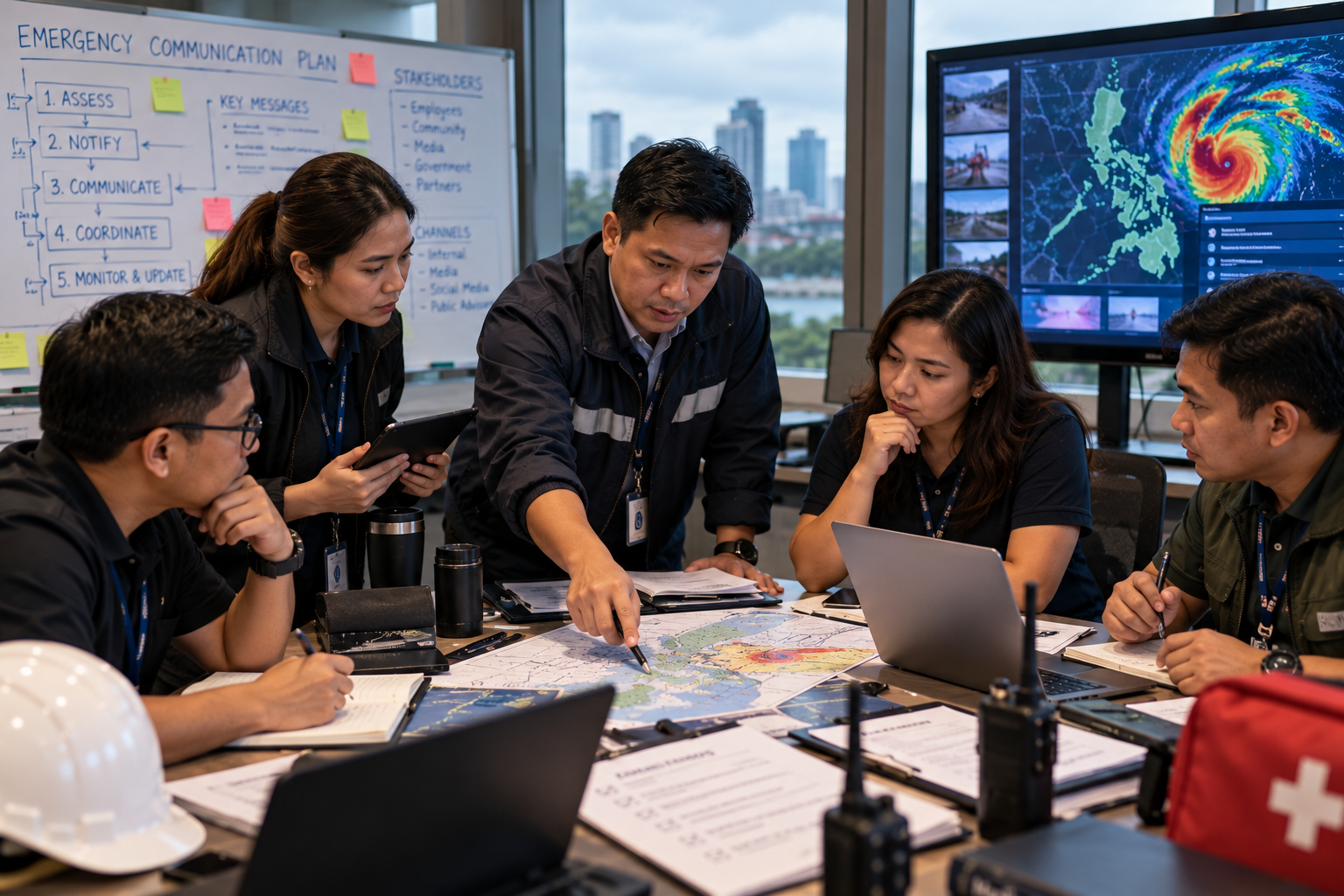
Building Your Emergency Communication Protocol Now
An effective emergency communication protocol for businesses, the core of any crisis-ready business checklist, should answer, in writing, well before any disruption hits:
- Who is authorized to approve and release public statements during a crisis?
- What are the notification timelines for employees, customers, and partners?
- Which channels will be used if primary communication infrastructure fails?
- What pre-approved message templates exist for the most likely scenarios, including how to prepare for El Niño in the Philippines?
- Who is the designated liaison for disaster response coordination in the Philippines, including LGUs and NDRRMC?
Answering these in a calm planning session is far easier than answering them mid-emergency.
That’s the entire premise of crisis readiness:
Doing the hard thinking early, so the response itself is simple.
Any time of year.
Don’t Wait for the Storm to Find Out You’re Unprepared
Disruption in the Philippines doesn’t follow a calendar, and it doesn’t wait for businesses to catch up.
The organizations that come through it with operations intact and reputations strengthened are the ones that treated crisis communications as a standing discipline.
Not a last-minute scramble.
This is where Universalis Consulting earns its reputation as the secret weapon Philippine businesses call on when the stakes are highest.
We move with speed and a genuine can-do attitude, because when a typhoon hits, there’s no time for hesitation, only execution.
Our team operates as your silent assassin in the background, quietly building the protocols, stakeholder maps, and pre-approved messaging that let your organization respond with confidence instead of panic.
As a firm that bridges the gap between business and political needs through deep public policy, government affairs, and strategic communications expertise, we understand not just what your organization needs to say, but how that message needs to align with LGU and NDRRMC coordination in real time.
We’re business brokers and problem solvers at heart, known for delivering creative and unique solutions even under the most unpredictable circumstances.
Clients trust us because we’ve earned a reputation for being reliable, trustworthy, and fast, the kind of miracle workers who show up when other advisors have already run out of answers.
Our premium services are built for organizations that can’t afford to gamble on reputation or operational continuity when disaster strikes.
Whether you need a full crisis communication plan for your Philippine business, support building stakeholder communication during a crisis, or a partner who can coordinate seamlessly across government channels, Universalis Consulting has the experience, the network, and the aggressive follow-through to get it done right — and fast.
Don’t Wait for the Storm to Find Out You’re Unprepared
Build a plan that protects your people, your operations, and your reputation all year round.
Inquire about Universalis Consulting’s crisis communications services today. (Coffee on us!)

Shanahan Chua
Strategic Communications Director, Universalis Philippines
Shan is a seasoned public relations and government relations professional with over 20 years of experience. His career includes leadership roles in local and regional capacities at market-leading companies — all operating in highly competitive and regulated industries.