 Loading...


Your reputation can be destroyed in 24 hours.
Are you ready to fight back?
In the Philippines—where a scandal goes from whisper to headline in under 3 hours, emerging threats don’t knock—they explode.
Misinformation spreads like wildfire. Social media amplifies every whisper. One political shift can turn your carefully built reputation to ashes.
Government agencies, media companies, and corporate leaders face unprecedented reputational risks.
The question isn’t if a crisis will hit—it’s when. And when it does, you need more than a plan. You need a weapon.
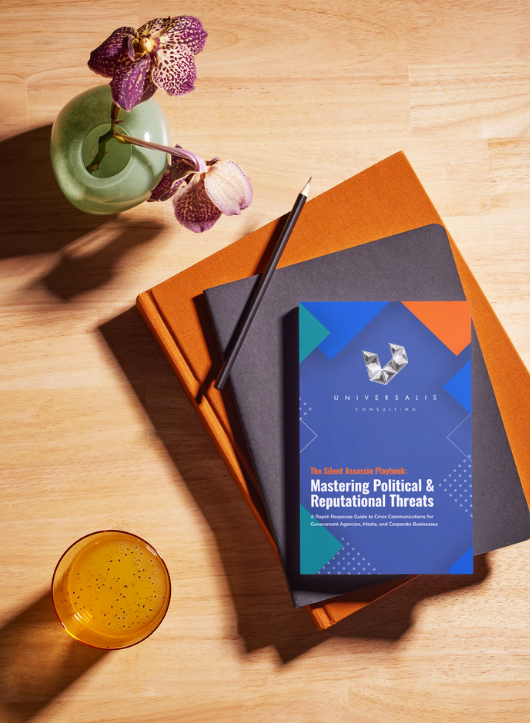
Introducing: The Silent Assassin Playbook
Your Rapid-Response Guide to Mastering Political & Reputational Threats
This isn’t your typical crisis management handbook. The Silent Assassin Playbook is a strategic arsenal designed for organizations that refuse to be victims of the narrative.
It’s for leaders who understand that in today’s volatile political landscape, controlling the story means controlling your future.
What You’ll Get

Part 1:
Preparation & Risk Assessment
Build your defense before the attack comes. Learn how to identify emerging political threats, establish continuous monitoring systems, assemble your crisis dream team, and designate battle-ready spokespersons.

Part 2:
Strategy & Messaging
Take control of the narrative. Master stakeholder communication, develop pre-approved crisis templates, implement multi-channel strategies, and deploy proactive social monitoring that cuts misinformation spread by 60%.

Part 3:
Readiness & Refinement
Stay sharp, stay ready. Conduct regular crisis drills that improve response times by 50%, and learn the post-crisis evaluation techniques that build long-term resilience.
Why This Playbook Changes Everything
Organizations with a crisis communications playbook reduce reputational damage by up to 70% during political crises.
“Timely crisis communication in the Philippines can increase public trust by over 80%. The data is clear: preparation isn’t optional—it’s survival.”
But here’s what most playbooks miss: they treat crises as isolated incidents. The Silent Assassin Playbook recognizes the truth—in the Philippines, business and politics are inseparable.
Your threats are political. Your stakeholders are watching. Your response must be fast, culturally intelligent, and strategically brilliant.
What Makes This Different:
Built for the Philippine Context:
Politically Savvy:
Actionable from Day One:
Battle-Tested Strategies:

The Cost of Being Unprepared
Every day without a crisis playbook is a gamble with your reputation. Consider what’s at stake:
Your stakeholder trust:
Once lost, nearly impossible to rebuild
Your operational continuity:
Crises don’t pause business—they paralyze it
Your competitive position:
While you scramble, competitors gain ground
Your legacy:
Years of work can vanish in a viral moment
In the Philippines’ active digital culture, where information spreads at lightning speed, delayed messaging doesn’t just look bad—it looks guilty.
“Silence becomes the story. And that story rarely ends well.”
Who This Playbook Is For
Government Agencies
facing public scrutiny, policy shifts, and social unrest
Media Companies
navigating misinformation, political pressure, and reputational attacks
Corporate Leaders
managing stakeholder expectations amid political volatility and emerging threats
If your organization operates where business meets politics—and in the Philippines, that’s everywhere—this playbook is your competitive advantage.
What Crisis Management Experts Say
The research is undeniable. Organizations that invest in crisis preparedness see measurable results: reduced reputational damage, faster response times, higher public trust, and better misinformation control.
%
Regular crisis drills improve team response times by 50%.
%
Multi-channel engagement strategies increase public trust by over 80%.
But statistics only tell part of the story. The real advantage? Confidence.
Knowing that when everything hits the fan, you have a proven system. Your team knows their roles. Your messages are ready. Your spokespersons are trained.
You’re not reacting—you’re executing.
Your Next Move
The Silent Assassin Playbook isn’t about hoping for the best. It’s about preparing for the worst and coming out stronger. It’s about transforming crisis from existential threat to manageable challenge.
Download your free copy today and discover:
The 10-step framework for political crisis preparedness
Pre-approved messaging templates for rapid response
Stakeholder communication strategies that build trust
Social monitoring techniques that detect threats early
Post-crisis evaluation methods that sharpen future responses
This is your silent weapon. Your strategic advantage. Your crisis survival guide.
Ready to Take Control of Your Narrative?
Don't wait for crisis to teach you lessons the hard way. Get The Silent Assassin Playbook now and arm yourself with the strategies, frameworks, and insights that protect reputations and preserve trust.
About Universalis Philippines
We’re not just crisis management consultants—we’re your miracle workers when everything is on the line.
With aggressive, fast, and premium crisis management services, we bridge the gap between business and politics, navigating high-stakes challenges with quiet but decisive precision.
We act fast. We think strategically. We deliver results. And when your reputation is under attack, we’re the silent assassin working in your corner—discreet, decisive, and always one step ahead.
Contact us today. Coffee is on us.