 Loading...


On 28 October 2025, Malaysian Prime Minister Anwar Ibrahim officially transferred the ASEAN Chairship via a ceremonial turnover to Philippine President Ferdinand “Bongbong” Marcos Jr. in Kuala Lumpur, Malaysia.
As the Philippines assumes the chairmanship post this 2026 for the 59-year old regional organization, how should both the government and business sector respond to the opportunities brought by our hosting this year?
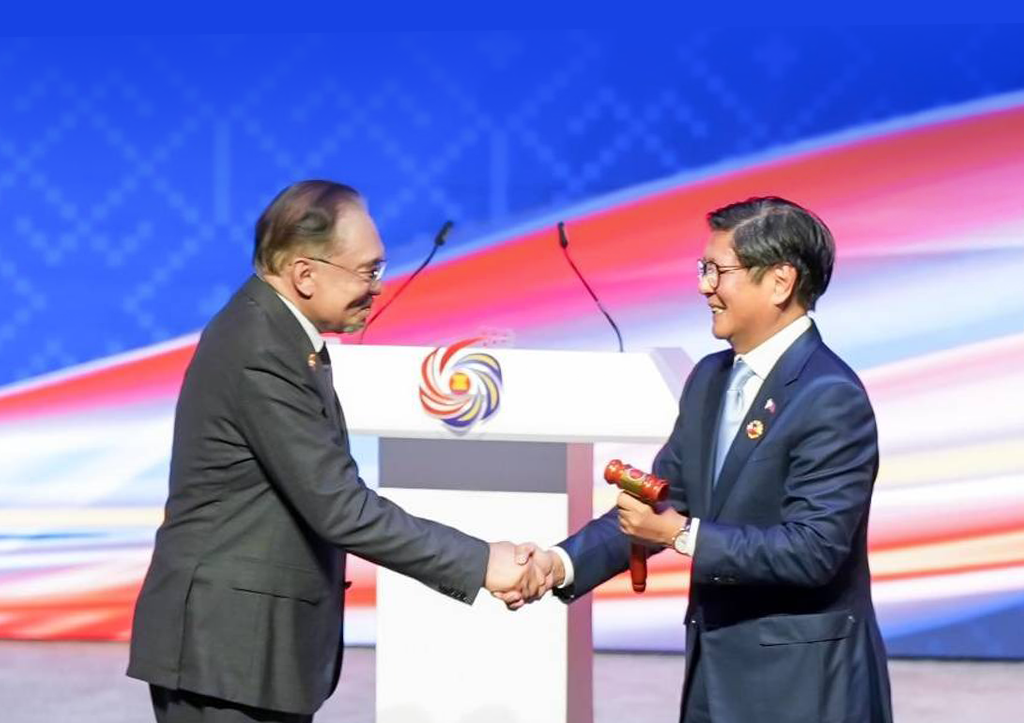
Image Credit: PCO
What is ASEAN?
The Association of Southeast Asian Nations, or the ASEAN, is a regional organization founded in 1967 during the Cold War. Originally founded by the maritime states of Southeast Asia such as the Philippines, Malaysia, Indonesia, Singapore, and Thailand, the organization has expanded its membership to include Brunei Darussalam and, later on, other states in Mainland Southeast Asia such as Vietnam, Cambodia, Myanmar, and Laos. Last year, ASEAN had formally announced the official membership of Timor-Leste, becoming its 11th member.
While ASEAN was originally established during the Cold War, the organization’s purpose and projects had already departed from its original mandate. At present, ASEAN member-states are journeying towards regional economic integration through the following pillars, namely, politico-security, economic, and socio-cultural communities.
The integration was initially targeted in 2015; however, due to various domestic reasons of each member-state, the intended regional economic union was rescheduled at a later date.
How relevant is ASEAN in the Philippine economy?
ASEAN’s Economic Community pillar is premised on free market principles. The intended regional economic community mirrors, to a certain extent, the approach of the European Union where free flow of goods, capital, and labor is encouraged and incentivized. In short, free trade and capital mobility are the fundamental hallmarks of the envisioned ASEAN Economic Community.
In this regard, the Philippines is set to benefit from the opportunities provided by the ongoing projects and agreements crafted by member-states to realize the organization’s economic pillar. Specifically, the promotion of free trade provides incentives and chances for the Philippine domestic business sector to capture and seize foreign markets of our regional neighbors.
On the other hand, emphasis on capital mobility positions the Philippines as a likely foreign investment destination especially for multinational companies coming from the developed economies of Singapore, Brunei Darussalam, Indonesia, and Malaysia.
ASEAN Chairship and its economic opportunities
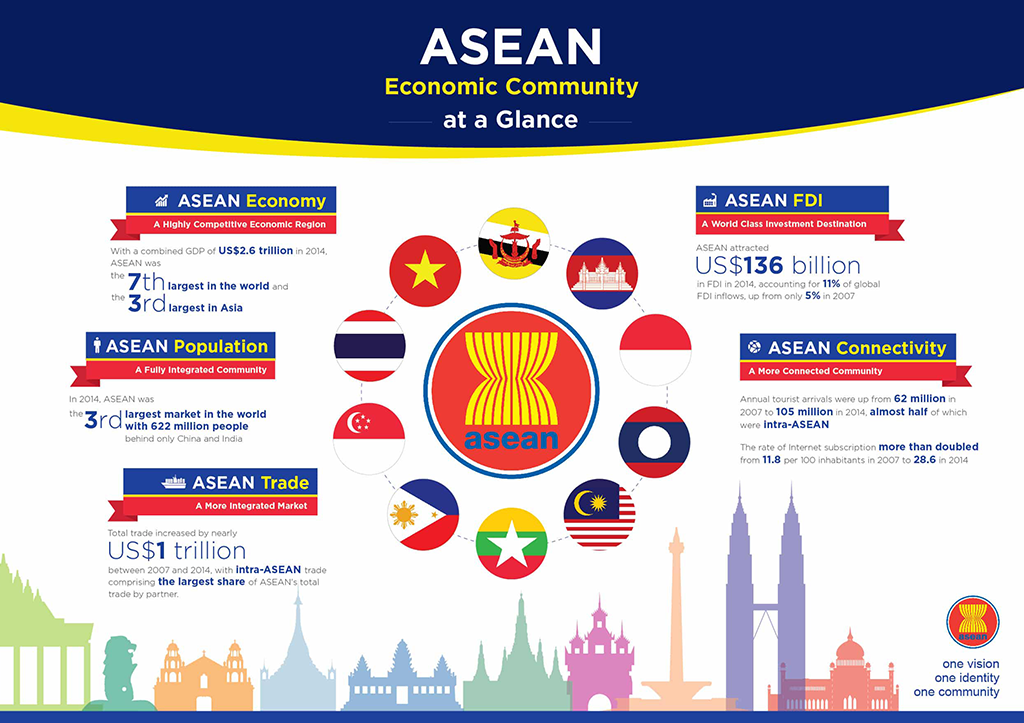
Image Credit: teacherph
The ASEAN Chairship duties of the Philippines this 2026 is an opportunity for the Philippines to further position itself as an economic leader in the region. By being this year’s Chair of various ministerial meetings, the Philippines enjoys the following prospects:
1. Position the Philippines as a foreign investment destination.
By being the ASEAN Chair, the Philippines does not only enjoy the chance of marketing the country as an investment destination for capital from ASEAN neighbors. The opportunity also extends to ASEAN’s dialogue partners attending the forthcoming meetings and summits such as but not limited to China, Japan, South Korea, India, the United States, Australia, New Zealand, etc.
2. Opportunity for homegrown companies to market themselves as business partners.
ASEAN’s emphasis towards capital mobility is only realizable through regional business partnerships. As such, the forthcoming ministerial meetings and other side meetings are opportunities to link Filipino-owned companies to other foreign investors which can further solidify and harmonize regional supply chains necessary for the intended regional economic integration.
3. Showcase the milestones of peacebuilding and development in Mindanao.
Remember that Mindanao has been an important hub of ASEAN trade since 1994 due to the creation of the growth triangle called Brunei-Indonesia-Malaysia-Philippines East Asian Growth Area or BIMP-EAGA. It is an opportunity for the Philippines to showcase the peacebuilding and development milestones in southern Philippines, especially with the growth of export-processing zones in various provinces in the area which connects these local economies to adjacent local economies of Malaysia, Brunei, and Indonesia.
How should the government and business sector respond?
The enumerated prospects must compel both the government and business sectors to act promptly in order to fully maximize these opportunities. The following steps are recommended:
1. The Philippine business sector should step up.
The timid attitude of many Filipino-owned businesses is no longer useful in this day and age. Local industry players are suggested to become pro-active in their communication strategies to showcase their business, as well as collaborative efforts with government bodies.
2. Equal support to local players.
A level playing field is needed in order for local players to fully demonstrate their potential to interested foreign partners. In this regard, government agencies play a big and important role to execute this necessity.
3. Need for a well-thought and well-planned Information, Education, and Communication (IEC) IEC campaign.
This applies to both government bodies and the business sector. For government bodies, it is a must to educate visitors from both ASEAN member-states and dialogue partners about existing efforts to liberalize the Philippine economy, incentives for foreign capital, and other reforms being undertaken to fully unlock the Philippine potential as an investment destination.
Meanwhile, for the business sector, a robust and reliable profile is a must as foreign business partners also conduct their research to whom they should approach or engage.
Ready to make the most out of 2026 for your business?
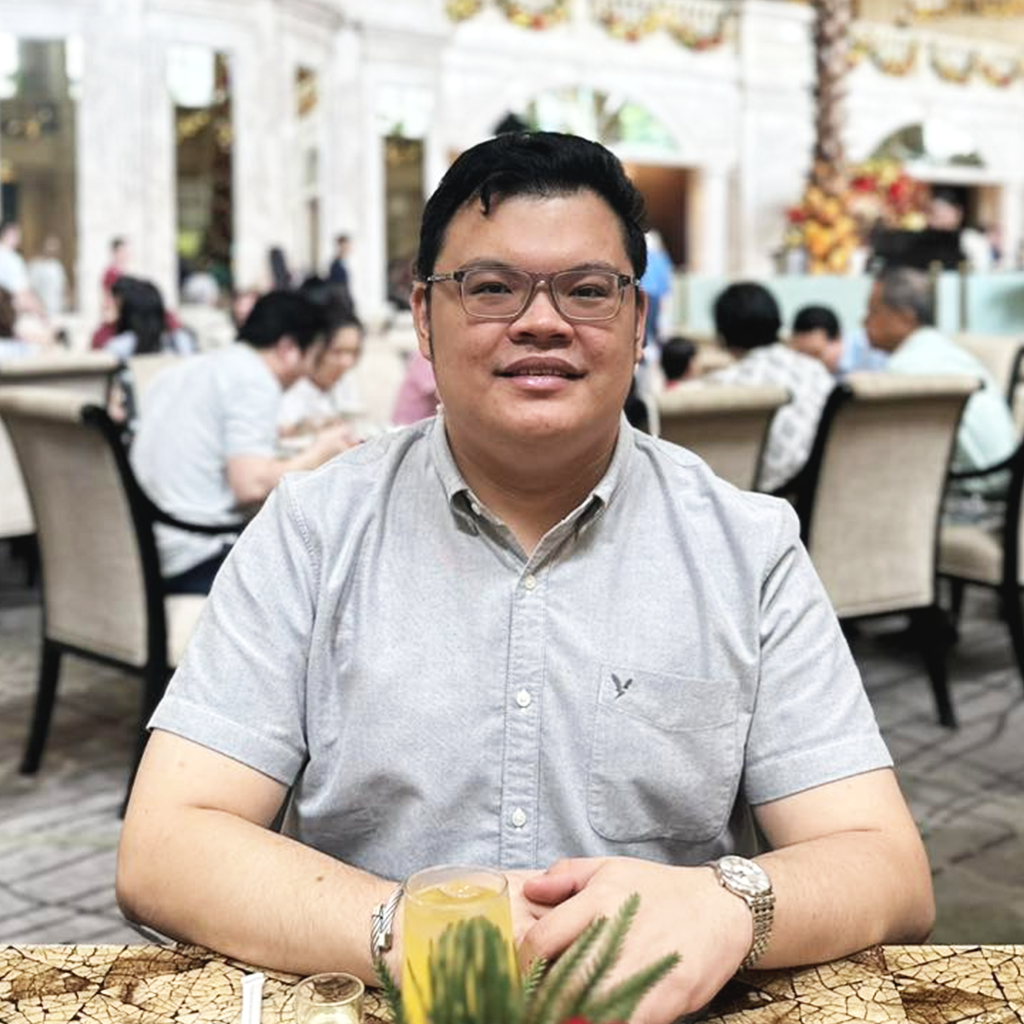
Brian U. Doce
Public Policy and Research Manager
Brian possesses a 10-year professional experience in various roles such as policy research and advocacy, teaching, diplomacy, and business-government relations. He is also a part-time lecturer at De La Salle University (DLSU) and University of Asia & the Pacific (UA&P) where he teaches courses on politics, development studies, and international relations. He is currently finishing his PhD in Politics and Global Studies from Murdoch University, Australia.